Domestic staffing comparison
Live-in vs live-out domestic staff
Choose live-in staff when the household genuinely needs a resident working arrangement and can provide suitable private accommodation. Choose live-out staff when the role fits defined working hours without residence. Compare schedule, privacy, space, total employment cost and practical availability rather than assuming one arrangement is automatically cheaper or more flexible.
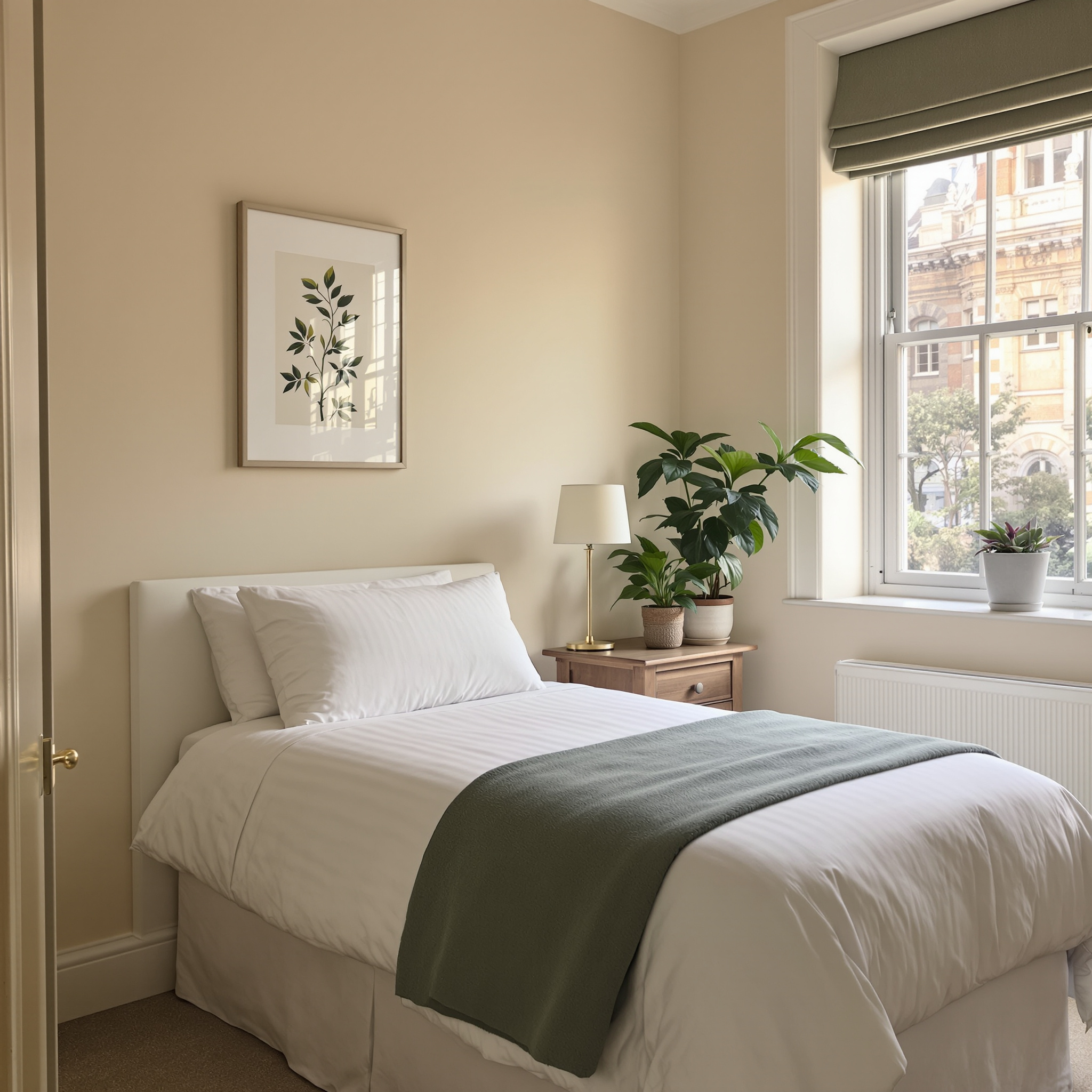
What is the difference between live-in and live-out domestic staff?
Live-in domestic staff live at the household or in employer-provided accommodation as part of the working arrangement. Live-out staff travel to and from work and do not reside with the employer. The difference affects accommodation, privacy, commuting, scheduling and total employment cost, but it does not change the need to define duties and working time clearly.
A live-in role is not a 24-hour role. Residence and working time are separate questions. If the household needs genuinely continuous or overnight support, the role and rota need to be designed around that requirement rather than inferred from the fact that the employee lives on site.
Live-in vs live-out at a glance.
The better arrangement is the one that fits the real schedule and household, not the one with the most convenient label.
When does a live-in arrangement make sense?
The working pattern genuinely benefits from residence.
Early starts, later finishes or split responsibilities can make commuting impractical, provided the actual working hours and rest periods are still clear.
The household can provide suitable private space.
Accommodation should be described before the search so candidates can assess the arrangement rather than discover it after interview.
Both sides are comfortable with closer day-to-day proximity.
Live-in employment creates more shared space and therefore needs stronger boundaries around privacy, visitors, meals and off-duty time.
When is live-out the clearer choice?
The role fits a normal commuting day.
If the household needs a predictable block of childcare or housekeeping, residence may add complexity without solving a real scheduling problem.
The household or employee prefers separation after work.
Live-out arrangements create a clearer physical boundary once the working day ends.
No suitable staff accommodation is available.
A household should not force a live-in arrangement into accommodation that does not provide an appropriate private living setup.

From our work: we treat live-in or live-out as a briefing field, not a personality preference.
Filipino Domestic Services asks households to state the working arrangement alongside the role, recurring duties, normal days and hours, location, intended start date and any practical requirements. For a live-in brief, accommodation details are part of that same conversation because the candidate needs to understand where they would live as well as what they would do.
That sequence helps us separate three questions that are often blurred together: what the job is, when the employee is working, and whether the employee resides at the property. A household may want an early-start nanny, for example, but that does not automatically make the role live-in if a suitable live-out schedule and commute are realistic. Equally, providing accommodation does not make the employee continuously available.
We also use the arrangement field to make privacy questions visible before matching. Live-in staff need clear information about private accommodation, shared spaces and off-duty boundaries. Live-out staff need a realistic commute against the actual start and finish times.
For that reason, our role brief does not decide live-in versus live-out from salary alone. The arrangement is assessed against household space, schedule, duties and the candidate’s willingness to accept that living pattern.
That keeps the accommodation decision downstream of the role itself, rather than letting the room determine the job.
Does live-in accommodation reduce minimum-wage obligations?
Employer-provided accommodation can affect National Minimum Wage calculations only through the statutory accommodation-offset rules; the market rental value of a room cannot simply be substituted for wages. This is general information, not personalised payroll or legal advice. For current figures and worked examples, use the dedicated minimum-wage guide for live-in staff.
When comparing arrangements, include salary, employer on-costs, pension duties where applicable, insurance, payroll administration and the actual accommodation cost to the household. Do not compare a live-in salary headline with a live-out salary headline and assume the difference is the total cost.
Live-in or live-out is separate from full-time or part-time.
A resident employee can work a defined part-time or full-time schedule, and a live-out employee can also work either pattern. If the next decision is the amount of weekly coverage rather than residence, compare full-time vs part-time domestic staff.
For an ongoing direct-hire role, the permanent domestic staff placement page explains the placement route once the household has chosen the arrangement.
Live-in vs live-out questions.
Is a live-in employee available 24 hours a day?
No. Living at the property and working time are separate. The household should agree normal working hours, rest and off-duty boundaries rather than treating residence as continuous availability.
Does a live-in employee need a private room?
The accommodation should be suitable and described clearly before the role is accepted. Privacy, shared spaces and off-duty arrangements should be explicit so both sides understand the living setup.
Is live-in domestic staff always cheaper?
No. Compare total employment cost, accommodation and the actual working pattern. National Minimum Wage rules limit how employer-provided accommodation can affect minimum-wage calculations.
Can a live-out nanny start very early?
Potentially, if the candidate can realistically travel to the household for the agreed start time. Early or late hours should be tested against the actual location and commute before the arrangement is chosen.
Can a live-in role be part-time?
Yes in principle. Residence and weekly hours are separate dimensions. The arrangement still needs a clear schedule, suitable accommodation and a role that makes practical sense for both parties.
How do I decide between live-in and live-out?
Start with the duties and working hours, then assess accommodation, commute, privacy and total cost. Choose the arrangement that solves a real household scheduling need rather than assuming one model is inherently better.
Sources and scope.
The comparison is grounded in the FDS live-in role brief and employer guidance. The accommodation-offset statement is deliberately narrow and routed to current official guidance.
Choose the arrangement before asking candidates to consider the role.
Define the schedule, accommodation and privacy boundaries first, then move into the permanent placement process.